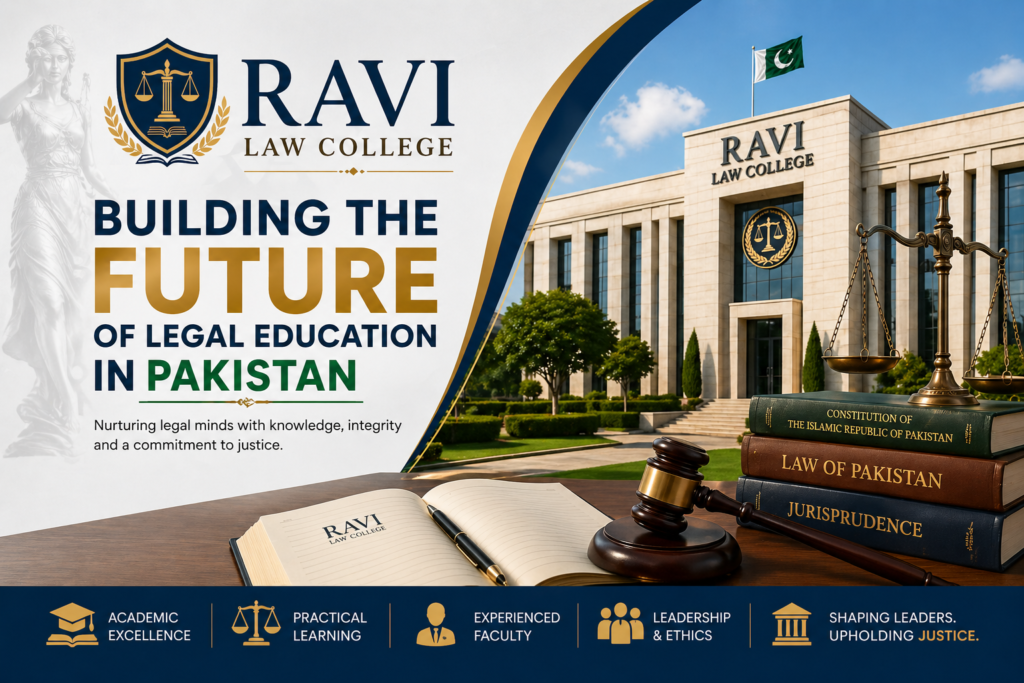
Ravi Law College: Building the Future of Legal Education in Pakistan
Introduction
Ravi Law College is emerging as an important name in the landscape of legal education in Pakistan. In a country where the demand for skilled legal professionals continues to grow, institutions like Ravi Law College play a critical role in shaping future lawyers, judges, legal advisors, and policymakers. With a focus on academic excellence, practical training, and ethical grounding, Ravi Law College aims to bridge the gap between theoretical law education and real-world legal practice.
The keyword “Ravi Law College: Building the Future of Legal Education in Pakistan” reflects the institution’s mission—developing competent legal professionals who can contribute meaningfully to justice, governance, and society.
The Importance of Legal Education in Pakistan
Legal education in Pakistan holds immense importance because it directly impacts the justice system, governance, and rule of law. A strong legal education system ensures:
- Better-trained lawyers in courts
- Improved legal awareness among citizens
- Stronger protection of constitutional rights
- Efficient judicial processes
However, traditional legal education in many regions has often been criticized for being overly theoretical. This is where modern institutions like Ravi Law College step in with updated curricula and practical exposure.
Ravi Law College and Its Vision
Ravi Law College focuses on building a new generation of legal professionals who are not only academically strong but also practically skilled. Its vision can be understood through the following core principles:
1. Quality Legal Education
The college emphasizes a structured legal curriculum that covers constitutional law, criminal law, civil law, international law, and corporate law.
2. Practical Learning Approach
Instead of relying solely on textbooks, students are encouraged to engage in moot courts, mock trials, internships, and case studies.
3. Ethical and Professional Development
A strong focus is placed on legal ethics, ensuring that graduates maintain integrity in their professional careers.
4. Skill-Based Training
Communication skills, argumentation, legal drafting, and research skills are developed to prepare students for real courtroom challenges.
Academic Programs and Learning Environment
Ravi Law College offers a learning environment that combines academic rigor with practical exposure. Students are guided by experienced faculty members who understand both the theoretical and applied aspects of law.
Key features of its academic environment include:
- Structured LLB programs
- Legal research workshops
- Guest lectures from legal professionals
- Interactive classroom discussions
- Access to law libraries and case databases
This combination helps students develop a deeper understanding of how law operates in real-world scenarios.
Role in Shaping Future Lawyers
The phrase “Ravi Law College: Building the Future of Legal Education in Pakistan” is not just a slogan—it reflects its contribution to society. The institution helps students:
- Understand legal systems and judicial processes
- Build confidence for courtroom appearances
- Learn how to interpret laws effectively
- Develop critical thinking and analytical skills
By focusing on these areas, Ravi Law College contributes to producing lawyers who are capable of handling complex legal issues in Pakistan and beyond.
Contribution to Legal Awareness in Society
Another significant contribution of Ravi Law College is promoting legal awareness. Many students and faculty members participate in community outreach programs that help educate people about their legal rights.
These initiatives often include:
- Free legal awareness seminars
- Workshops on citizens’ rights
- Guidance on legal procedures
- Public discussions on social justice issues
Such efforts help bridge the gap between the legal system and the general public.
Challenges in Legal Education and How Ravi Law College Responds
Legal education in Pakistan faces several challenges, including outdated teaching methods, lack of practical exposure, and limited access to resources in some institutions.
Ravi Law College addresses these challenges by:
- Updating its curriculum regularly
- Encouraging practical legal training
- Promoting digital legal research tools
- Strengthening student-faculty interaction
This modern approach helps students stay aligned with global legal standards.
Career Opportunities for Graduates
Graduates from Ravi Law College have a wide range of career options, including:
- Advocacy in courts
- Corporate legal advisory roles
- Government legal services
- Judicial examinations and judiciary roles
- Legal consultancy and research
The strong foundation provided by the college helps students pursue successful careers in both public and private sectors.
Conclusion
Ravi Law College is steadily establishing itself as a key institution in Pakistan’s legal education system. Through its commitment to quality education, practical training, and ethical development, it is helping shape a new generation of legal professionals.
The idea behind “Ravi Law College: Building the Future of Legal Education in Pakistan” reflects not just academic goals but a broader mission of strengthening justice and legal awareness in society. As Pakistan continues to evolve, institutions like Ravi Law College will remain essential in shaping the legal minds of tomorrow.
FAQs
1. What is Ravi Law College known for?
Ravi Law College is known for providing quality legal education with a focus on both theory and practical training in law.
2. What programs does Ravi Law College offer?
It primarily offers law-related academic programs, including LLB studies and legal skill development courses.
3. Does Ravi Law College focus on practical training?
Yes, it emphasizes moot courts, internships, and practical case studies to prepare students for real legal practice.
4. What career options are available after studying at Ravi Law College?
Graduates can pursue careers in law practice, judiciary, corporate law, legal consultancy, and government services.
5. Why is Ravi Law College important for legal education in Pakistan?
It helps improve legal education standards by combining academic knowledge with practical legal skills and ethical training.