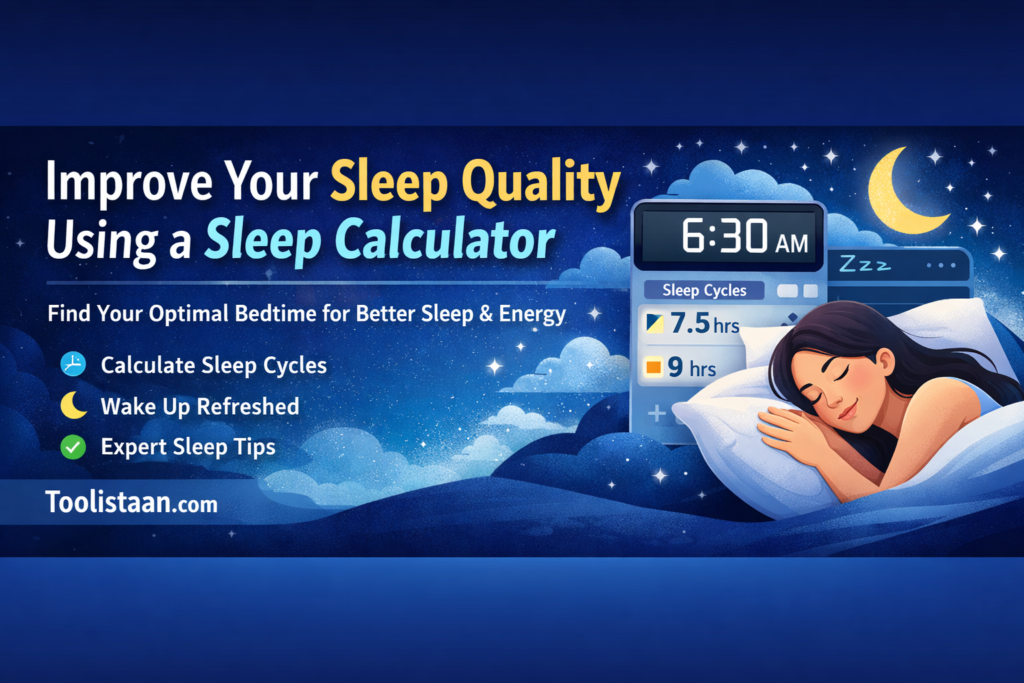
Sleep is one of the most essential foundations of human health. Yet, millions of people around the world struggle to get high‑quality sleep. Poor sleep not only impacts your mood and energy but also affects metabolism, immunity, brain function, and overall well‑being.
In today’s digital age, tools like a Sleep Calculator can help you understand and improve your sleep patterns scientifically. In this in‑depth guide, we’ll explore how a sleep calculator works, how to use it, and practical strategies to improve sleep quality backed by research, expert recommendations, and real‑world tips.
What is a Sleep Calculator?
A sleep calculator is a reliable online tool that helps you determine the optimal time to fall asleep or wake up based on your sleep cycles. It works on the concept that human sleep is divided into multiple 90‑minute cycles:
🌙 Light Sleep
🌙 Deep Sleep
🌙 REM Sleep
Each cycle plays a unique role in cognitive function and physical restoration. A sleep calculator suggests the best times to wake up or go to bed so your body completes full sleep cycles — helping you wake up refreshed and alert.
Why Sleep Quality Matters
Good sleep quality is more than just hours of rest. It affects:
✔ Brain performance
✔ Memory consolidation
✔ Emotional regulation
✔ Cellular repair
✔ Hormone balance
✔ Weight management
✔ Immune health
Poor sleep quality can lead to fatigue, anxiety, chronic stress, and long‑term health issues like diabetes and heart disease.
How a Sleep Calculator Works (Simple Explanation)
A sleep calculator works on these principles:
Sleep Cycles
Each sleep cycle lasts ~90 minutes. The goal is to wake up between cycles, not during them.
Recommended Sleep Duration
Adults typically need 7–9 hours of sleep per night.
Bedtime Calculation
If you know your wake time, the sleep calculator computes the best bedtime using backward cycles.
Example:
If you need to wake up at 6:30 AM:
✔ 7.5 hours = 5 cycles → bedtime ~11:00 PM
✔ 9 hours = 6 cycles → bedtime ~9:30 PM
This allows your body to complete full cycles reducing grogginess.
Step‑by‑Step: How to Use a Sleep Calculator
Follow these steps for best results:
Step 1: Know Your Wake‑Up Time
Decide when you have to wake up tomorrow (e.g., 7 AM).
Step 2: Enter It Into the Sleep Calculator
Use the calculator on Toolistaan.com and input your wake‑up time.
Step 3: Get Ideal Bedtimes
The tool will show suggested bedtimes based on sleep cycles.
Step 4: Choose One & Stick With It
Pick a bedtime that matches your schedule.
Step 5: Adjust Your Routine
Prepare your environment and habits accordingly (covered later).
Top Tips to Improve Sleep Quality
Using a sleep calculator is great, but real improvements depend on your habits. Here are effective tips:
1. Maintain a Consistent Sleep Schedule
Going to bed and waking up at the same time every day trains your internal clock, helping you fall asleep faster and wake up refreshed.
2. Create a Relaxing Bedtime Ritual
Relaxing activities before bed help slow your mind:
✔ Warm bath
✔ Reading a book
✔ Light stretching
✔ Meditation or breathing exercises
Avoid screen time 1 hour before sleep.
3. Mind Your Sleep Environment
Your bedroom should be:
🌙 Cool (60–67°F / 15–19°C)
🌙 Dark
🌙 Quiet
🌙 Comfortable mattress & pillow
Block out noise with earplugs or white noise machines.
4. Watch What You Eat and Drink
Avoid these before sleep:
🚫 Caffeine (coffee, tea, energy drinks)
🚫 Nicotine
🚫 Heavy meals
Instead, choose light snacks like bananas or almonds.
5. Stay Physically Active
Regular exercise improves sleep quality, but finish workouts at least 2–3 hours before bed.
6. Manage Stress and Anxiety
Stress increases cortisol, the wake-up hormone. Try:
✔ Journaling
✔ Mindfulness
✔ Deep breathing
✔ Soothing music
7. Limit Daytime Naps
Long naps can disturb nighttime sleep. If you nap, limit it to 20–30 minutes before mid-afternoon.
8. Get Sunlight Exposure
Morning sunlight helps reset your internal clock, making it easier to fall asleep later.
9. Avoid Electronics Before Bed
Blue light from screens suppresses melatonin, the sleep hormone. Turn off major screens at least 60 minutes before bed.
10. Track Your Sleep Patterns
Apps, journals, and calculators help you understand and improve your sleep cycles.
Sleep Calculator Hacks for Every Lifestyle
For Students
Sleep calculators help plan naps around study sessions and avoid post-nap grogginess.
For Shift Workers
Align sleep cycles with your most stable sleeping hours and darken your room during daytime sleep.
For Parents
Schedule your sleep around your child’s routine and prioritize consistent bedtime.
Common Mistakes People Make
❌ Ignoring lifestyle habits
❌ Changing routines frequently
❌ Assuming more sleep always means better sleep
Use the calculator as a guide, not a substitute for healthy sleep habits.
Why Sleep Calculators Work Better Than Guessing
Most people habitually sleep without timing. Sleep calculators:
✔ Use science-based sleep cycles
✔ Help optimize wake-up times
✔ Reduce sleep inertia (grogginess)
✔ Improve mental clarity and mood
Research shows consistent sleep timing correlates with better health outcomes — including improved heart health and metabolism.
How Toolistaan’s Sleep Calculator Helps You
Toolistaan.com offers a free, intuitive sleep calculator that:
✅ Suggests the best times to wake up
✅ Calculates bedtimes based on 90-minute cycles
✅ Works for all ages and lifestyles
✅ Helps you plan sleep around your schedule
Using our sleep calculator daily can help train your body to rest better naturally.
Conclusion
Improving your sleep quality doesn’t require expensive gadgets or treatments. With a sleep calculator, smart habits, and consistency, you can:
✨ Fall asleep faster
✨ Wake up more refreshed
✨ Improve energy, mood & performance
✨ Boost long-term health
Start today — calculate your ideal bedtime, set a routine, and experience the transformation of better sleep.
FAQs
Q1: How accurate are sleep calculators?
Sleep calculators are scientifically grounded tools based on sleep cycle patterns. While not perfect, they’re more accurate than random sleep schedules.
Q2: Can sleep calculators help with insomnia?
They can help structure your sleep routine, but severe insomnia may require professional medical support.
Q3: Is 8 hours always best?
Most adults benefit from 7–9 hours, but quality matters more than quantity.